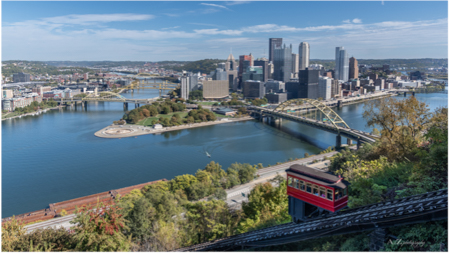
Pittsburgh, A Photography Destination?
February 18, 2026 by Beth Haubach
Why Pittsburgh?
I say, “Why not?”
As a native Pittsburgher, I’m obviously biased. I grew up six miles north of the city, but it wasn’t until I moved away that I truly appreciated it. After spending 33 years in the Washington, DC area (where it takes entirely too long to get anywhere) coming home feels like a luxury. I can go door to door, park, and be in my seat for a Penguins game in fifteen minutes. No exaggeration.
A Photographer’s City
As a photographer, I’ve come to appreciate Pittsburgh in all its forms, from the grit of Carrie Furnace to the sweep of Mt. Washington at sunset. The city rewards curiosity. Slow down, look carefully, and it keeps offering something new.
The range is what makes it special. In a single day you can move from:
- industrial ruins
- dramatic river-carved cityscapes
- quiet hillside cemeteries
- neighborhoods with distinct visual identities
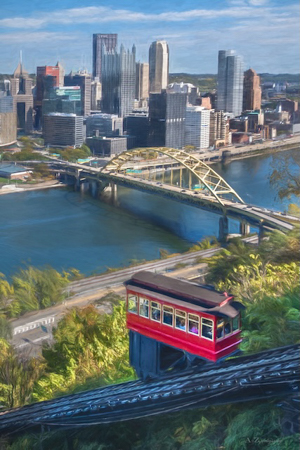
I’ve spent an hour working reflections under a bridge, then turned around and found a completely different composition behind me. The possibilities aren’t just plentiful, they’re layered.
A City Shaped by History
Founded in 1758, on land long inhabited by Native American tribes, Pittsburgh sits at the confluence of the Allegheny and Monongahela Rivers, forming the Ohio. Its location made it strategically critical during the French and Indian War and later earned it the name “Gateway to the West.”
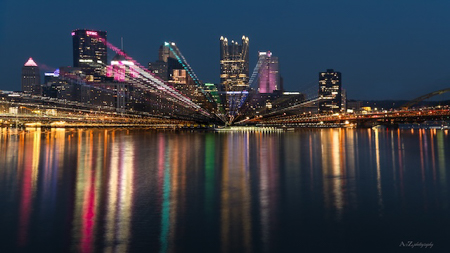
By the early 1900s, Pittsburgh was manufacturing nearly half the nation’s steel. That legacy still shapes the city, you see it in the bridges, the warehouses, and the neighborhoods built for mill workers more than a century ago.
From “The Smoky City” to Reinvention
That industrial growth came at a cost. In the late 19th and early 20th centuries, coal use deposited an estimated 100 tons of pollutants onto city streets each month, earning Pittsburgh the nickname “The Smoky City.”
Still known as the Iron City or Steel City, Pittsburgh continues to manufacture steel today but with a focus on specialty products and niche markets. When the steel era declined, the city reinvented itself. Today, technology, healthcare, and education drive the economy. Old industrial buildings sit not far from robotics labs and research centers, a contrast that makes for compelling visual storytelling.
Bridges, Hills, and Vantage Points
Three rivers cut through the city, connecting more than ninety neighborhoods via over 446 bridges. The “Three Sisters” bridges, now illuminated with LED lighting, create striking reflections and graphic lines at night.
From Mt. Washington, the view of “dahntahn” and the Golden Triangle never gets old. I still enjoy watching first-time visitors see it for the first time. The historic inclines aren’t just transportation, they’re subjects and vantage points in their own right.
The Strip District
Once industrial and later a wholesale produce hub, the Strip District is now a lively mix of markets, warehouses, shops, and institutions like the original Primanti Bros. restaurant
On a typical morning, it’s hard not to find a frame; vendors setting up, steam rising from food carts, conversations unfolding on sidewalks. It’s ideal for street and documentary work.
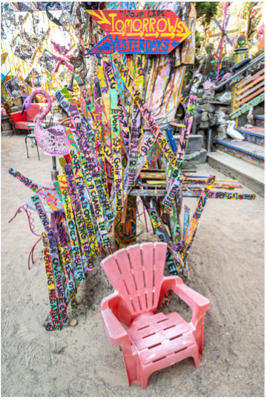
An Architectural Playground
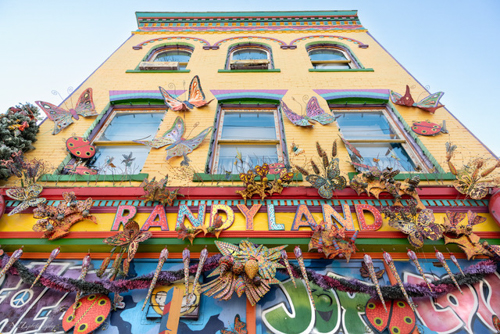
Pittsburgh packs an extraordinary range of architectural styles into a relatively compact city. Victorian and Italianate homes sit not far from Mid-Century Modern and contemporary design. The Mexican War Streets neighborhood showcases ornate detailing, while nearby Randyland delivers an explosion of color and whimsy just blocks away.
Downtown, Romanesque Revival, Neo-Gothic, Modernism, and Beaux-Arts coexist with contemporary glass towers like PPG Place. Walk from the Strip District to Point State Park and you pass through more than a century of architectural history in under a mile.
The beauty of photographing Pittsburgh is that everything is close. We can shoot sunrise from Mt. Washington, spend mid-morning in the Strip District, and still have time for bridges at blue hour without ever feeling rushed.
Recognition and Validation
In 2025, Lonely Planet recently named Pittsburgh one of its Top 10 Must-Visit Cities in the World, the only U.S. city on the list. National Geographic followed by recognizing Pittsburgh as a Best of the World destination for 2026.
When those lists came out, I laughed a little. Not because I was surprised but because the rest of the world was finally catching on!
Why Pittsburgh?
Pittsburgh is a city that wears its history honestly while still reinventing itself. It’s gritty. It’s graceful. It’s industrial and surprisingly intimate. And even after all these years, it still catches me off guard.
For photographers, especially those willing to slow down and really look, it keeps giving.
So when people ask me, “Why Pittsburgh?”
I still say, “Why not?”
Join me for my Photo Workshop on June 11. Let's explore this dynamic city together!